The Michigan Department of Education (MDE) is tasked with overseeing the state’s public school system. It manages academic standards, educator certification, and statewide learning initiatives. In recent years, the MDE has spearheaded a statewide push to strengthen its educator pipeline to address critical educator shortages and expand preschool access.
Turning Education R&D Investments into Impact
With federal and state support, Michigan strengthened its educator pipeline by creating research-informed high school-to-career pathways.
Supported by a portion of a $16.1 million federal grant awarded to the Region 8 Comprehensive Center (R8CC), the Michigan Department of Education established a research-informed strategy to design and scale the Future Proud Michigan Educator LAUNCH program. Once the LAUNCH initiative was designed, Michigan used its legislative appropriations along with funding from the federal Preschool Development Grant Birth through Five (PDG B-5) program, the American Rescue Plan Act (ARPA), the Elementary and Secondary School Emergency Relief Fund (ESSER), and Perkins, to support implementation. The state funds paid for credential assessor incentives, student teacher stipends, and district-level execution.
The impact of these investments is clear:
- The number of active local programs nearly tripled, from 58 in 2020 to 151 in 2026.
- Since 2020, student participation more than doubled, resulting in more than 5,000 additional students in Michigan’s educator pipeline.
- The number of students completing the pathway and earning workforce credentials grew exponentially year-over-year, increasing from just two in 2020 to 187 in 2025.
How State and Federal R&D Investments Are Expanding Michigan’s Educator Workforce
In 2020, leaders in Michigan saw the need to expand its state-funded, free preschool program, known as the Great Start Readiness Program (GSRP), so that working and low-to-moderate-income families had access to high-quality preschool. In 2021, the state passed the “largest education investment in state history”—$168.5 million—to expand access to GSRP for all income-eligible four-year-olds. But expanding access also meant expanding the workforce needed to deliver it: more funded preschool seats required far more qualified early childhood educators than the state had on hand.
Michigan’s expansion created demand that outpaced its supply of qualified professionals, prompting a need for a more structured, long-term approach to attracting, preparing, and sustaining educators—particularly in early learning but also across K-12 schools, after-school, and summer learning programs. The state’s response ultimately tripled active local programs and supported the development of more than 5,000 aspiring Michigan educators
To fill this gap, the Michigan Department of Education (MDE) partnered with the Region 8 Comprehensive Center (R8CC) to use applied research to design a new career pathway for high school students interested in pursuing careers in education and youth development. Together, they identified the key components of effective preparation, including alignment with industry expectations and credential requirements.
The resulting Future Proud Michigan Educator (FPME) LAUNCH program became a structured career pathway within Michigan’s Education and Training cluster. It’s one of the state’s Grow Your Own (GYO) initiatives, aimed at strengthening local teacher workforces by recruiting and training community members, with the intention that newly trained educators return to teach in their home communities.
LAUNCH is for current high school students in grades 10, 11, and 12 who are aspiring educators. It is embedded within Michigan’s existing CTE system and aligned with state educator preparation standards and credentialing infrastructure. Offered at no cost to students, completion of the pathway leads directly to industry-recognized credentials. Along the pathway, students progress through specialized coursework and clinical experiences to earn their Child Development Associate (CDA), Michigan School-Age Youth Development Associate (MI-YDA), or Registered Behavior Technician (RBT) certification.
Michigan’s intentional approach sets up young people like Josie, a former CDA student, for success. She credited the program’s practical design with her smooth transition into a teaching role, noting, “Each CDA student had a job, like running circle time or reading books, so I got to work with the children a lot. Meanwhile, I also gained college credits, which gave me a jumpstart on earning a bachelor’s degree while working at the Peck School as an assistant teacher.”
Evidence-Based Practices
To support strong outcomes and scalable implementation, R8CC and MDE used a structured, iterative process focused on capacity building and systems design for the LAUNCH program. Together, they established a dedicated LAUNCH project team, advisory group, and coordinated with four offices across two MDE divisions to adapt and redesign pathways. This approach strengthened the state team’s understanding of GYO programs’ effectiveness and supported the integration of the following evidence-based practices into the program:
- Competency-Based Learning: Focusing on mastery of specific skills rather than just “seat time,” enabling high school students to advance based on demonstrated readiness while maintaining rigor.
- Integrated Clinical Experiences: Providing students with hands-on practice in real-world education and youth-serving settings. By analyzing industry standards, the advisory group identified that mandatory clinical hours had to be embedded directly into the high school experience.
- Cross-Sector Collaboration & Localized Recruitment: Engaging local education agencies and community-based organizations (like Head Start programs, YMCAs, and childcare centers) to create a diverse implementation network. To implement this, the MDE leveraged practitioner resources to help local districts define, identify, and fund nontraditional pathways. This localized approach is grounded in foundational GYO research demonstrating that recruiting community members is highly effective because teachers generally prefer to work near where they grew up or where they completed their teacher preparation program.
- Aligned Credentialing: Ensuring the curriculum maps directly to high-value workforce credentials and established entry points into the education profession. The unprecedented collaboration across MDE divisions allowed the team to seamlessly embed these pathways into Michigan’s existing CTE infrastructure. This directly supports Governor Gretchen Whitmer’s “Sixty by 30” initiative, which aims for at least 60% of adults in Michigan to have a skill certificate or college degree by 2030.
“The Future Proud Michigan Educator (FPME) LAUNCH initiative demonstrates the power of research-informed design and cross-sector partnership in addressing educator workforce challenges…. [The growth of this program] would not have been possible without the partnership and research support provided through our Comprehensive Center, which helped translate data, workforce needs, and evidence-based practices into scalable statewide implementation.”
The Impact
Michigan’s LAUNCH initiative demonstrates how coordinated education R&D can effectively tackle complex workforce challenges. To ensure sustainable success, the R8CC embedded evaluation and communication strategies into the program from the outset, establishing a structured data collection plan that drives continuous improvement.
The impact of this investment was evident almost immediately. Within just one year, LAUNCH pathways expanded to reach students in over 80% of Michigan’s intermediate school districts, successfully bridging rural, suburban, and urban communities alike. This rapid initial access quickly translated into tangible student engagement, drawing more than 1,500 aspiring educators into MiRegistry, Michigan’s statewide professional registry, to begin their career journeys.
Since that initial rollout, the initiative has achieved massive multi-year scaling across the state. The number of active local programs has nearly tripled, growing steadily from 58 in 2020 up to 151 programs in 2026.
This expanding infrastructure is successfully converting classroom learning into workforce readiness; the number of students finishing the rigorous pathway and earning workforce credentials has grown exponentially each year, from just two students in 2020 to 187 in 2025. To support this influx of qualified graduates, the state has also provided financial incentives to train more of the professional evaluators needed to award these new credentials to students.
Education R&D Playbook in Practice
Michigan’s LAUNCH initiative illustrates two key recommendations from ALI’s State Education R&D Playbook: 1) Provide Technical Support and 2) Empower Local Leaders. The state has relied on R&D partners to supply the deep technical assistance required for complex, cross-agency systems design. Additionally, it built sustainable internal infrastructure with the creation of a dedicated LAUNCH project team and advisory group. By breaking down silos and coordinating across four distinct MDE offices, Michigan generated the centralized, cross-agency capacity needed to successfully embed and scale these evidence-based career pathways within its existing CTE network.
Instead of relying on isolated interventions, Michigan aligned data, research, systems design, and evaluation to build a scalable, replicable model for how states can strengthen educator pipelines. As the state continues to expand LAUNCH pathways, it is partnering with researchers at Michigan State University on an ongoing evaluation of long-term workforce entry and retention outcomes, and may adapt this R&D model for additional high-need education workforce areas.
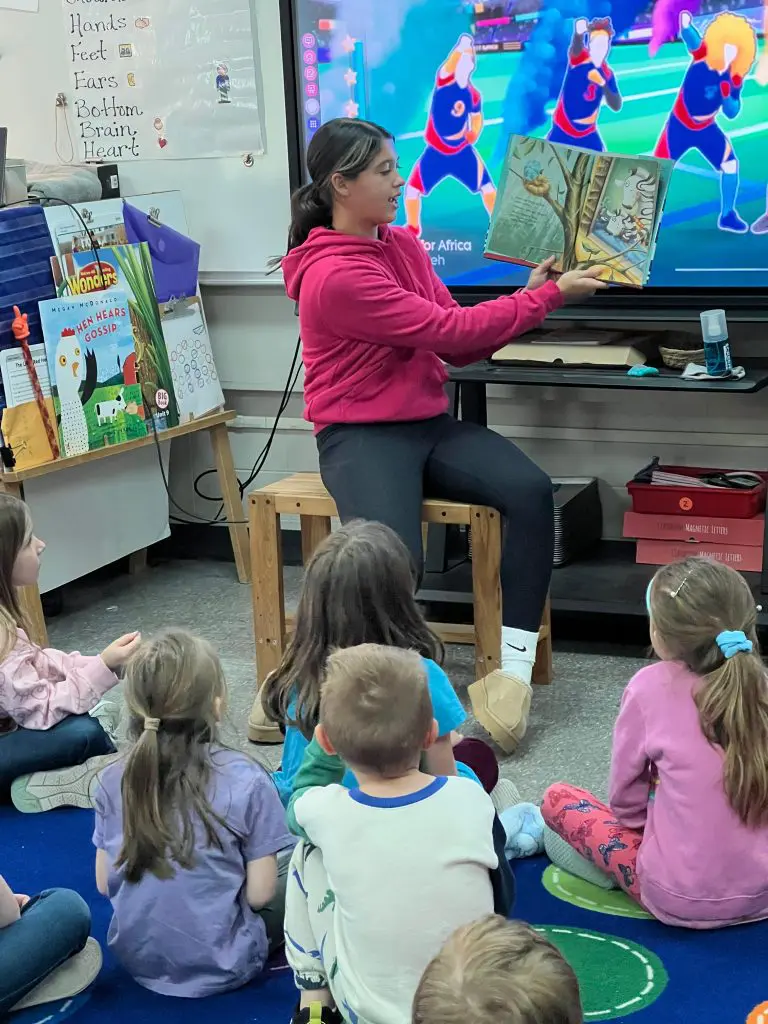
Image of Charlotte, Michigan’s CTE program provided by Candace Vinson