For decades, the education research community has focused on scaling promising programs to reach more students. But lasting change doesn’t come from trying to replicate a program step-for-step; it comes from replicating the student experiences that make learning meaningful.
Earth Force has worked with educators and partner organizations for over 30 years to bring Environmental Applied Civics (EAC) into classrooms and community programs nationwide. After training over 200 organizations in our 6-step EAC Process, we reached an important conclusion: the Process itself isn’t the essential ingredient. The student experiences it produces are. The organizations that successfully integrated EAC weren’t those that followed our Process exactly. They were the teams that understood the underlying principles and adapted them to fit their existing curriculum while preserving what makes the approach effective. As it turns out, that same tension, between following a process exactly and preserving what makes it work, sits at the center of a much broader debate in education research.
Researchers have a name for it: fidelity, or the degree to which an intervention is delivered as intended. It’s a question implementation science has wrestled with for decades, and the field hasn’t settled on a definitive answer. Blase and Fixsen offer one idea: the goal isn’t to follow every step exactly, but to preserve the key elements that drive results. That is, implementation can look different in different settings while still staying true to the intervention.
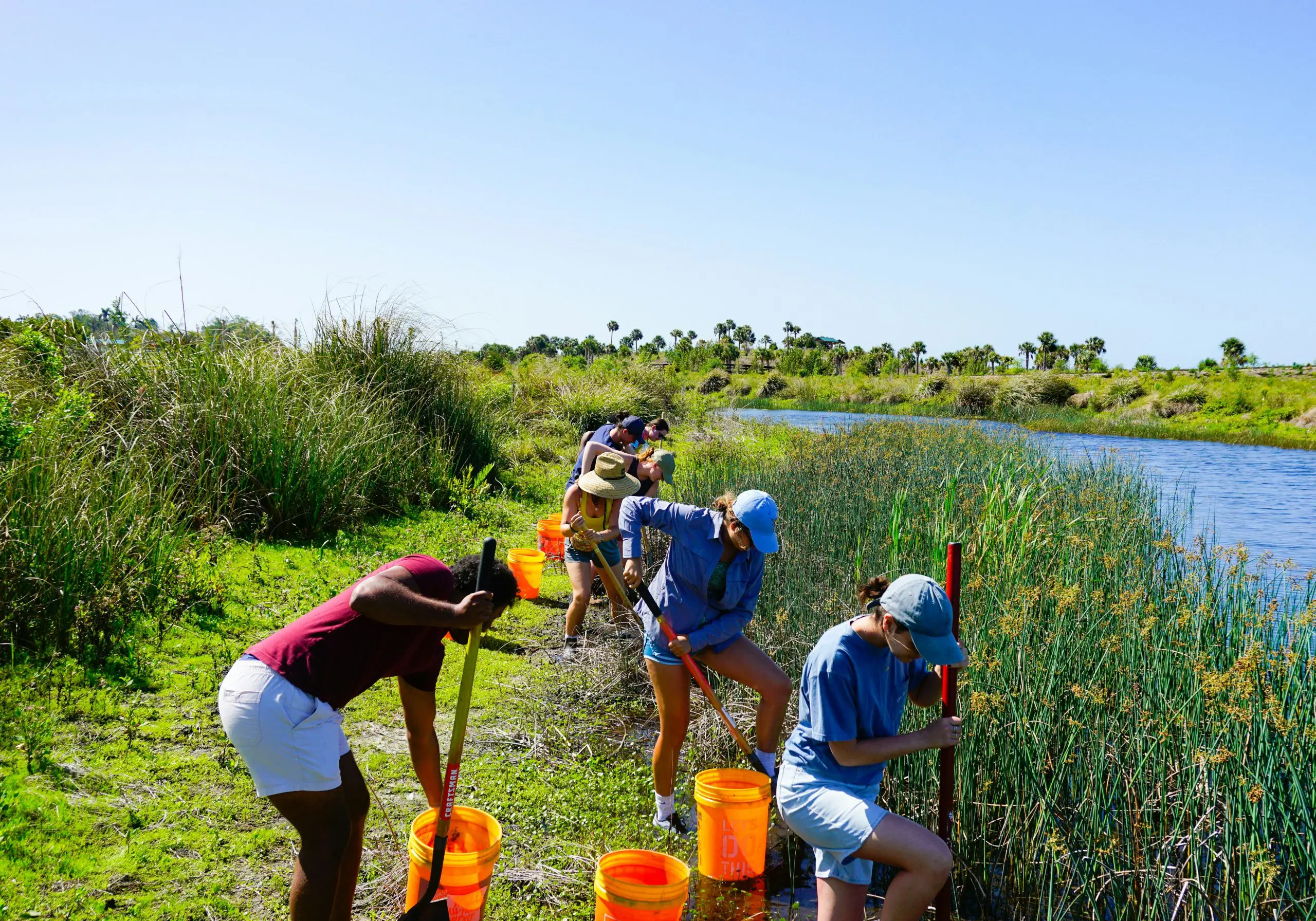
That distinction matters enormously in civic learning, where the intervention is highly context-dependent. The experience of a student group in a coastal Florida community investigating water quality will vary significantly from that of students in a Colorado mountain town working on wildfire preparedness. The issues, community partners, and even civic pathways will all look different— but students will have remarkably similar experiences engaging with stakeholders, conducting research, and informing change in policy or practice. If fidelity means procedural sameness, these two projects can’t both be high-fidelity implementations of the same approach. But if fidelity means presence of essential experiences, then they can.
Emphasizing Experiences over the Script
Civic learning research keeps pointing in the same direction: what matters most is not following a prescribed process but creating the learning experiences that help young people develop civic knowledge, skills, and agency. Kahne and Sporte’s landmark study suggests students become more civically committed when they discuss real issues, have a voice, and take action, not just when they learn civic content. CIRCLE’s research on civic learning through action similarly highlights students choosing their own issue, developing a plan, and acting upon it through actions ranging from lobbying elected officials to testifying before local bodies.
The research confirms our own conclusion that it’s the experiences that matter, not the process: issue selection rooted in lived experience, genuine shared authority and autonomy over how the work unfolds, and direct engagement with the institutions that hold power over the problem. These elements are what implementation science would call core components: the functions that must be present according to research, whatever form the surrounding program takes. For education R&D, that suggests a different focus of study: not simply whether a program can be replicated, but whether the essential experiences it was designed to create can be reliably produced across different contexts.
What Happens When Experiences Become the Unit of Fidelity
When we stopped measuring fidelity by whether organizations perfectly followed our 6-step Process and started measuring whether students experienced three core experiences, something changed. Our approach became portable in a way it hadn’t been before. Organizations could make the approach their own without losing what made it work. For example, the University of Florida Extension Program built its Community Action Projects for the Environment (CAPE) by adapting our essential experiences for 4-H clubs, and now reaches more than 15 organizations across the Southeast by focusing on key experiences instead of exact program replication.
The main criticism of experience-based fidelity is that it can be too flexible to the point that implementations no longer preserve what made the original work. The answer is to make experiences observable and measurable.
The Inland Seas Education Association (ISEA) illustrates what that looks like in practice through their EAC coaching work, where a student group has been investigating bee populations and school land use through a beekeeping class with their teacher, and participating in a school board meeting about district property acquisition. Nobody scripted those opportunities. A coach who understands the value of engaging community power structures can identify specific and applicable civic learning opportunities, name them for the educator, and help them build a plan. Throughout the school year, we join ISEA coaching check-ins to help educators recognize and deepen essential experiences as they emerge. We explore questions like: Did students choose their own issue? Did they shape how they investigated it? Did they bring their findings to someone with authority to act? Those questions are our fidelity check. They don’t require a rubric. They require an honest answer.
The Key Takeaway
The field has invested heavily in identifying what works. But too often scaling focuses on the ‘what ‘—a curriculum, a framework, a program—while underinvesting in the ‘how,’ or the organizational conditions that let people adapt and sustain the work over time. The harder question is what should travel when we scale. For complex civic-learning interventions, the answer is not a procedural sequence. It is a clearly defined set of student experiences that are observable, teachable, and tied to outcomes.